Principle Dentist Dr Alfie Chan BDS DRDP (Restorative Dentistry) Dip.Implant Dent., Assoc.FCG Dent.

Providing Professional Dental Care Across Newbury & Surrounding Areas - For Dental Emergencies Please Call: 07359 448 100

Principle Dentist Dr Alfie Chan BDS DRDP (Restorative Dentistry) Dip.Implant Dent., Assoc.FCG Dent.

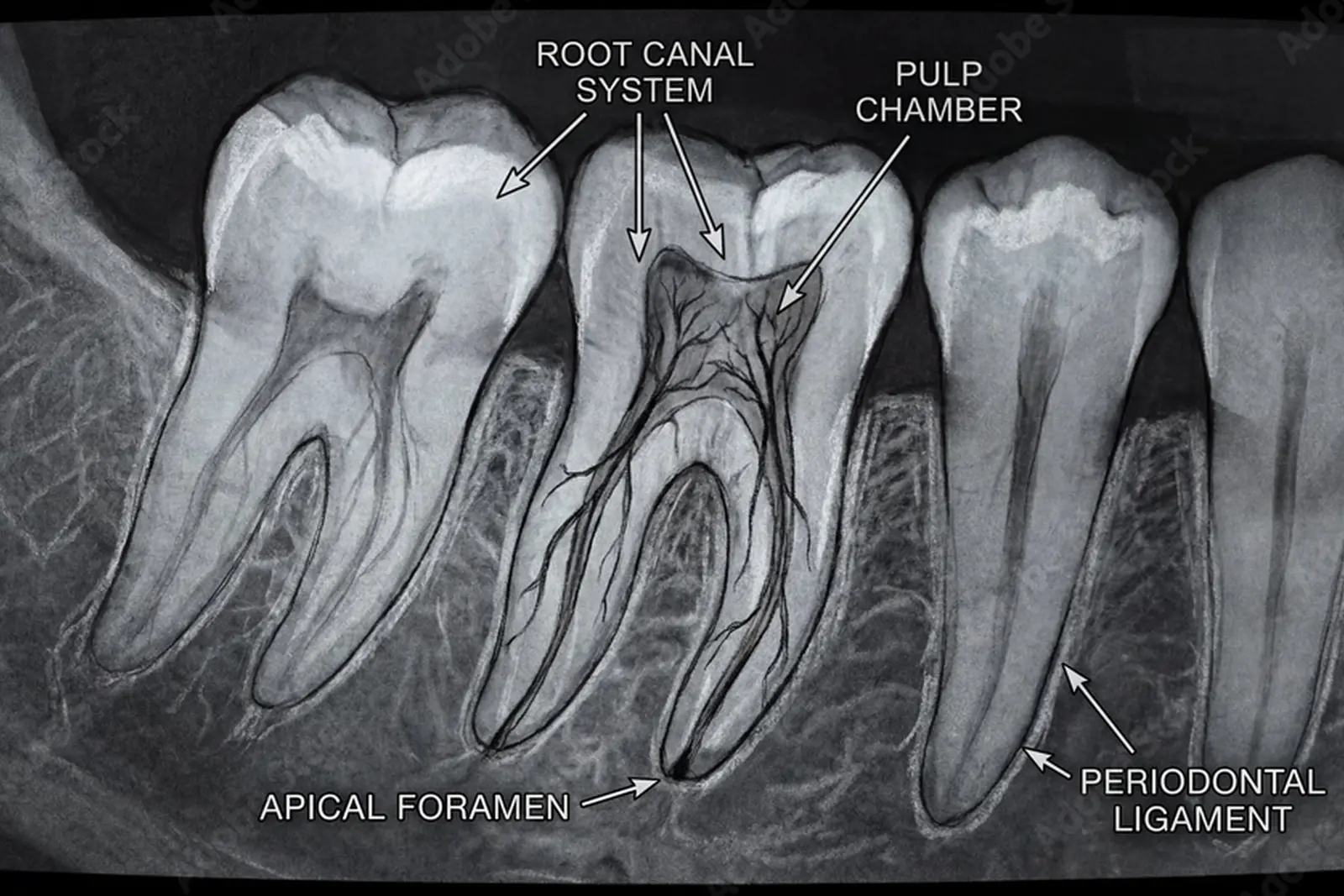
Root Canal Treatment Dental X-Ray

Root Canal Treatment

Root canal treatment, also known as endodontic treatment, is a dental procedure used to save a tooth that has become severely infected or damaged. The treatment involves removing the infected or inflamed pulp tissue from inside the tooth, cleaning and disinfecting the root canals, and then sealing the space to prevent further infection. Root canal treatment allows patients to keep their natural tooth instead of having it extracted.

The pulp inside the tooth contains nerves and blood vessels. When deep decay, trauma, cracks, or repeated dental procedures affect the tooth, bacteria can enter the pulp and cause infection or inflammation. This may lead to symptoms such as severe toothache, sensitivity to hot or cold, swelling, pain when biting, or the formation of a dental abscess. In some cases, there may be no symptoms, but infection can still be present and visible on an X-ray.

The main purpose of root canal treatment is to eliminate infection and preserve the natural tooth structure. Saving the tooth is usually preferable to extraction because it maintains normal chewing function, prevents neighbouring teeth from shifting, and preserves the appearance of the smile. After the infected pulp is removed, the canals are shaped, cleaned, and filled with a special material called gutta-percha to seal them.

Following root canal treatment, the tooth can become weaker and more brittle because the nerve and blood supply have been removed. This is especially important in posterior teeth, such as premolars and molars, which are exposed to heavy chewing forces. For this reason, dentists often recommend placing a crown on a posterior tooth after root canal treatment. The crown covers and protects the tooth, reducing the risk of fracture and restoring full function.

In conclusion, root canal treatment is an effective procedure that removes infection, relieves pain, and saves natural teeth. When combined with a protective crown on posterior teeth, it provides long-term strength, function, and durability.